Dynamic Data & Security

Protecting your property has never been more important or more achievable than it is today. The evolution of security technology has transformed what was once a luxury into an accessible necessity for homeowners and businesses across South East Queensland. With break-ins and property crimes remaining a concern throughout 2026, investing in the right home security device can make the difference between vulnerability and peace of mind. Understanding which devices suit your specific needs, how they integrate, and what features matter most will help you build a security system that grows with your requirements.

Understanding Modern Home Security Devices

The home security device landscape has expanded dramatically over the past decade. What started with simple door sensors and loud sirens has evolved into sophisticated ecosystems that combine multiple detection methods, intelligent analytics, and remote monitoring capabilities.

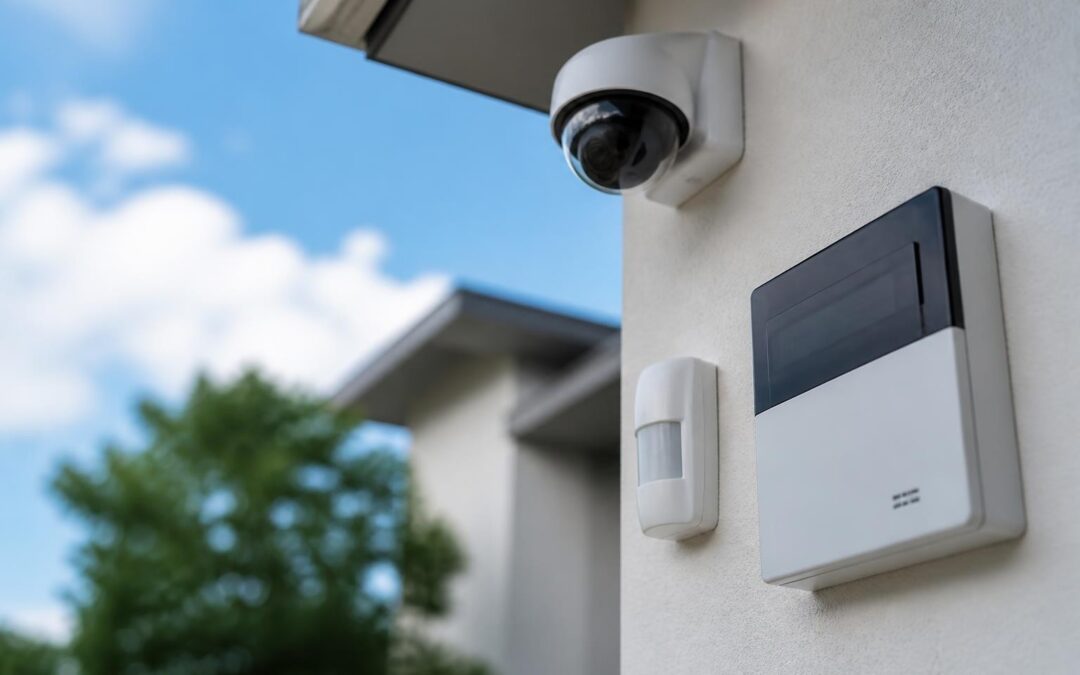
Today's security devices fall into several distinct categories, each serving a specific protective function. Detection devices identify potential threats through motion, glass break, or perimeter sensors. Visual verification systems like CCTV cameras capture evidence and enable real-time monitoring. Access control mechanisms regulate who enters your property and when. Alarm systems alert you and monitoring stations when breaches occur.

The most effective security strategies layer these devices to create redundancy. If one system fails or is bypassed, others continue protecting your premises.

Core Device Categories

Sensor-Based Detection:

  • Passive infrared (PIR) motion detectors
  • Door and window contact sensors
  • Glass break detectors
  • Vibration sensors for fences and gates
  • Environmental sensors (smoke, flood, temperature)

Visual Surveillance:

  • Fixed dome cameras for consistent coverage
  • PTZ (pan-tilt-zoom) cameras for active monitoring
  • Bullet cameras for long-range viewing
  • Video doorbells for entry point verification

Access Management:

  • Electronic locks with keypad or biometric access
  • Swipe card and fob readers
  • Intercom systems with video verification
  • Automated gate controllers

According to the 2026 Home Security Market Report, adoption of security cameras has reached 48% among Australian homeowners, with video doorbells close behind at 38%. These statistics reflect growing awareness that visual verification adds substantial value beyond traditional alarm-only systems.

Layered security detection

Choosing the Right Home Security Device for Your Needs

Selecting appropriate security devices begins with understanding your specific vulnerabilities and operational requirements. A retail shopfront faces different threats than a warehouse, and a family home has distinct needs compared to a corporate office.

Risk Assessment Framework

Start by mapping your property's entry points, valuable assets, and high-traffic areas. Exterior vulnerabilities include ground-floor windows, rear doors, loading docks, and poorly lit perimeters. Interior risks might involve server rooms, cash handling areas, or storage containing valuable inventory.

Consider your property's characteristics. Large sites require different coverage than compact premises. Buildings with multiple access points need integrated control systems. Properties in isolated locations benefit from verified alarm response systems that reduce false dispatch calls.

Property TypePrimary ThreatsRecommended DevicesPriority Features
Retail ShopSmash and grab, after-hours entryCameras, glass break sensors, alarm panelHigh-quality recording, instant alerts
WarehousePerimeter breach, vehicle theftPerimeter sensors, PTZ cameras, access logsLong-range detection, weather resistance
Office ComplexUnauthorised access, data theftAccess control, internal cameras, door sensorsUser management, integration capability
ResidentialOpportunistic burglary, package theftVideo doorbell, motion sensors, monitoringUser-friendly apps, pet immunity

The DIY Home Security Systems Market Report reveals that 67% of consumers now research security devices online before purchasing, with professional installation remaining the preference for 58% of commercial buyers who value expert configuration and ongoing support.

Device Specification Priorities

Image Quality Matters: For any home security device that captures video, resolution determines evidentiary value. 1080p represents the minimum for facial recognition, while 4K cameras provide identification-quality footage at greater distances. Night vision capabilities, measured in metres of infrared range, prove equally critical since most break-ins occur after dark.

Power and Connectivity: Wired devices offer reliability and avoid battery maintenance, though installation costs more. Wireless options provide flexibility for heritage buildings or rental properties. Hybrid systems balance both approaches. Network connectivity determines whether devices can send real-time alerts and store footage off-site.

Integration Capability: The best security systems allow different devices to trigger coordinated responses. A motion sensor can activate cameras to start recording, turn on lights, and send alerts simultaneously. This integration multiplies the effectiveness of each individual home security device.

For businesses across Brisbane, the Gold Coast, and Sunshine Coast, Security & Alarm Systems installed to Australian Standards provide dual-path communication and professional monitoring integration that consumer-grade devices cannot match. These systems scale from single-room protection to multi-site commercial installations with centralised management.

Security & Alarm Systems - Dynamic Data & Security

Smart Features and Connectivity Options

The "smart" designation attached to modern security devices refers to network connectivity, app-based control, and intelligent automation. These features transform standalone sensors into coordinated security ecosystems.

Remote Access and Control

Mobile applications let you monitor live camera feeds, arm or disarm alarms, unlock doors for deliveries, and receive instant notifications regardless of your location. This remote capability proves invaluable for business owners managing multiple sites or property managers overseeing portfolios.

Cloud storage preserves footage even if local recording equipment is damaged or stolen. Most services retain 7-30 days of continuous recording, with motion-triggered events stored longer. Consider bandwidth requirements-4K cameras uploading continuously demand substantial data allowances.

Two-way audio through cameras and video doorbells enables communication with visitors, delivery personnel, or potential intruders. The deterrent effect of speaking directly through a home security device often prevents incidents from escalating.

Artificial Intelligence and Analytics

Modern security cameras incorporate AI processors that distinguish between people, vehicles, and animals. This reduces false alarms from passing wildlife or moving vegetation. Advanced systems recognise faces, read number plates, and detect loitering or perimeter violations.

Behavioural analytics identify unusual patterns-someone approaching the same door repeatedly, vehicles circling your car park, or access attempts during unusual hours. These insights transform reactive security into proactive threat detection.

The NIST survey on smart home security perceptions found that users often underestimate privacy risks from poorly configured devices. Ensure any connected home security device uses encrypted communications, strong unique passwords, and regular firmware updates.

Smart security automation

Professional Installation Versus DIY Deployment

The decision between professional installation and self-deployment significantly impacts system reliability, compliance, and long-term performance.

Professional Installation Advantages

Licensed installers bring expertise in optimal placement-camera angles that eliminate blind spots, sensor positioning that maximises detection zones, and cable routing that maintains aesthetics while meeting Australian Standards. This knowledge prevents common DIY mistakes like cameras facing windows (causing glare) or sensors placed where HVAC vents trigger false alarms.

Professional systems integrate with monitoring services that verify alarms before dispatching emergency services. This verification reduces false alarm fees while ensuring genuine threats receive immediate response. Many insurance providers offer premium discounts for professionally monitored systems.

Compliance and warranty considerations matter for commercial installations. Licensed cablers ensure security devices meet building codes and electrical safety requirements. Equipment installed by certified technicians typically carries manufacturer warranties that DIY installation voids.

When DIY Makes Sense

For residential properties with straightforward layouts, quality wireless systems offer legitimate value. Modern devices feature intuitive apps and detailed installation guides. Renters particularly benefit from removable systems that relocate without property modification.

Cost considerations favour DIY for basic setups-a few cameras and sensors without professional monitoring. However, calculate the total cost including your time, potential mistakes requiring replacement devices, and the lack of expert configuration.

FactorProfessional InstallationDIY Installation
Upfront CostHigher (labour + devices)Lower (devices only)
ReliabilitySuperior placement and configVariable, learning curve
MonitoringIntegrated professional servicesSelf-monitoring or basic plans
ScalabilityEasily expanded with planningMay require complete replacement
SupportOngoing technical assistanceManufacturer support only
ComplianceMeets Australian StandardsBuyer responsibility

Businesses requiring audit trails, insurance compliance, or multi-site management consistently achieve better outcomes through professional deployment of each home security device.

Maintenance and System Longevity

Security devices require ongoing maintenance to deliver reliable protection. Neglected systems degrade into false security-appearing functional while failing when needed most.

Routine Maintenance Tasks

Camera maintenance involves cleaning lenses quarterly, checking mounting hardware for corrosion, and verifying recording quality. Infrared LEDs degrade over time, reducing night vision range. Annual professional inspections catch deterioration before failure.

Sensor testing should occur monthly. Walk test motion detectors, open windows with contact sensors armed, and verify communication with control panels. Battery-powered devices need replacement on manufacturer schedules-typically 2-3 years for sensors, annually for high-draw devices.

Software updates patch security vulnerabilities and add features. Configure devices to update automatically during low-traffic hours, or schedule quarterly update sessions. Outdated firmware represents a significant vulnerability that attackers actively exploit.

System Upgrades and Expansion

Technology evolves rapidly, but quality infrastructure lasts decades. Future-proofing begins with structured cabling that supports higher bandwidth requirements. Category 6 cabling installed today handles tomorrow's 8K cameras without rewiring.

Plan expansion zones when initially deploying systems. Pre-running cables to potential camera locations or installing conduit for future sensors costs little during construction but proves expensive to retrofit.

Scalability considerations include:

  • Control panels with unused zones for additional sensors
  • Network video recorders (NVRs) with spare channels
  • Access control systems supporting additional readers
  • Power supplies sized for 25-30% expansion capacity

Replace individual devices as they fail or become obsolete while maintaining the broader infrastructure. This phased approach spreads costs while ensuring critical protection continues uninterrupted.

Integration with Broader Business Systems

The most sophisticated security deployments integrate with operational technology to provide business intelligence beyond simple protection.

Operational Integration Points

Access control integration with time and attendance systems eliminates separate clock-in devices. Employees swipe once, recording both building entry and work hours. Integrate with payroll systems to automate timesheets based on verified access events.

Point-of-sale integration links transaction data with video footage. If discrepancies appear during reconciliation, corresponding video provides context. This capability deters internal theft while resolving customer disputes definitively.

Building management systems coordinate security devices with HVAC, lighting, and energy management. Arming alarms can trigger "away mode" that adjusts climate control and turns off non-essential equipment, reducing operational costs while enhancing security.

Data Analytics and Reporting

Modern systems capture valuable data beyond security events. Traffic patterns reveal peak customer hours, helping optimise staffing. Occupancy data supports workspace utilisation decisions for offices transitioning to hybrid work models.

Generate compliance reports demonstrating security investment to insurers, satisfying audit requirements, or providing evidence for legal proceedings. Automated reporting schedules deliver weekly summaries of access events, alarm activations, and system health metrics.

Privacy considerations require balancing security needs with employee and customer rights. Clearly posted signage, defined retention policies, and access controls limiting who views footage help maintain ethical surveillance practices.

Cost Considerations and Return on Investment

Understanding the total cost of ownership for security devices enables informed investment decisions that balance protection with budget constraints.

Upfront Investment Components

Equipment costs vary dramatically by specification. Basic 1080p cameras start around $200-300, while commercial-grade 4K models with advanced analytics exceed $1,500. Multiply by the number of required devices, then add:

  • Control panels and recording equipment ($500-5,000+)
  • Installation labour ($800-3,000 for residential, $5,000-50,000+ for commercial)
  • Cabling and mounting hardware (10-20% of equipment cost)
  • Initial configuration and testing (included in professional installation)

Monitoring subscriptions range from $30-80 monthly for residential services to $200-500+ monthly for commercial monitoring with verified response. Cloud storage adds $10-50 monthly per camera depending on retention periods and resolution.

Ongoing Operating Expenses

  • Maintenance contracts: $500-2,000 annually for professional servicing
  • Power consumption: Cameras typically draw 5-15 watts continuously
  • Internet bandwidth: 2-8 Mbps per camera for cloud-connected systems
  • Replacement parts: Budget 5-10% of system value annually

Calculating ROI

Insurance premium reductions of 10-20% immediately offset monitoring costs. Document your professional installation and monitoring service when requesting quotes.

Loss prevention delivers harder-to-quantify returns. One prevented break-in potentially saves tens of thousands in stolen property, business interruption, and increased premiums. The presence of visible security devices deters 60-70% of opportunistic criminals before attempts occur.

Liability protection through recorded evidence resolves disputes favourably. Footage proving employee or customer claims false saves legal costs and settlements. Conversely, valid claims resolve faster with clear video evidence.

For commercial properties, the right home security device configuration typically achieves payback within 18-36 months through combined insurance savings, loss prevention, and operational efficiencies.

Emerging Technologies and Future Trends

The security industry continues rapid innovation, with several technologies transitioning from experimental to practical deployment throughout 2026.

Advanced Detection Methods

Thermal imaging cameras detect intruders in complete darkness without visible light that alerts subjects to surveillance. Prices have decreased to commercial viability, particularly for perimeter protection at industrial sites.

Acoustic detection identifies sounds associated with forced entry-breaking glass, cutting metal, or drilling-even when visual coverage proves impractical. These sensors complement traditional devices in locations where cameras face obstruction or privacy concerns.

LiDAR sensors create three-dimensional mapping of spaces, detecting intrusions through volume changes rather than visual or heat signatures. This technology works in conditions that defeat conventional sensors.

Network and Communication Advances

5G connectivity enables higher resolution cameras with lower latency, supporting real-time response to security events. Private 5G networks for large campuses eliminate dependence on public internet infrastructure.

Mesh networking among security devices creates redundant communication paths. If one device loses connectivity, others route around the failure, maintaining system integrity.

Edge computing processes video analytics locally on each home security device rather than uploading raw footage to cloud servers. This reduces bandwidth requirements while improving privacy through data minimisation.

Artificial Intelligence Evolution

Predictive analytics identify patterns suggesting planned criminal activity-repeated reconnaissance visits, probing of security measures, or coordinated movements. Early warning enables preventive action before incidents occur.

Automated responses triggered by AI recognition-locking specific doors when unauthorised personnel approach restricted areas, or directing security staff to intercepts based on predictive movement patterns.

Deepfake detection protects against sophisticated social engineering attempts using AI-generated audio or video to impersonate authorised personnel during access requests.

These emerging capabilities will continue differentiating professional-grade systems from consumer devices, with complexity requiring expert configuration to realise their potential.


Building effective security requires understanding how each home security device contributes to comprehensive protection while integrating smoothly with your operational requirements. Whether protecting a family home or a multi-site commercial operation, the right combination of cameras, sensors, alarms, and access control creates layered defence that scales as your needs evolve. Dynamic Data & Security has delivered tailored security solutions across Brisbane, the Gold Coast, and Sunshine Coast for over 20 years, combining licensed installation expertise with ongoing support that ensures your investment continues protecting what matters most. Contact Dynamic Data & Security today for a free on-site assessment and discover how professional security design builds systems that grow with your business.