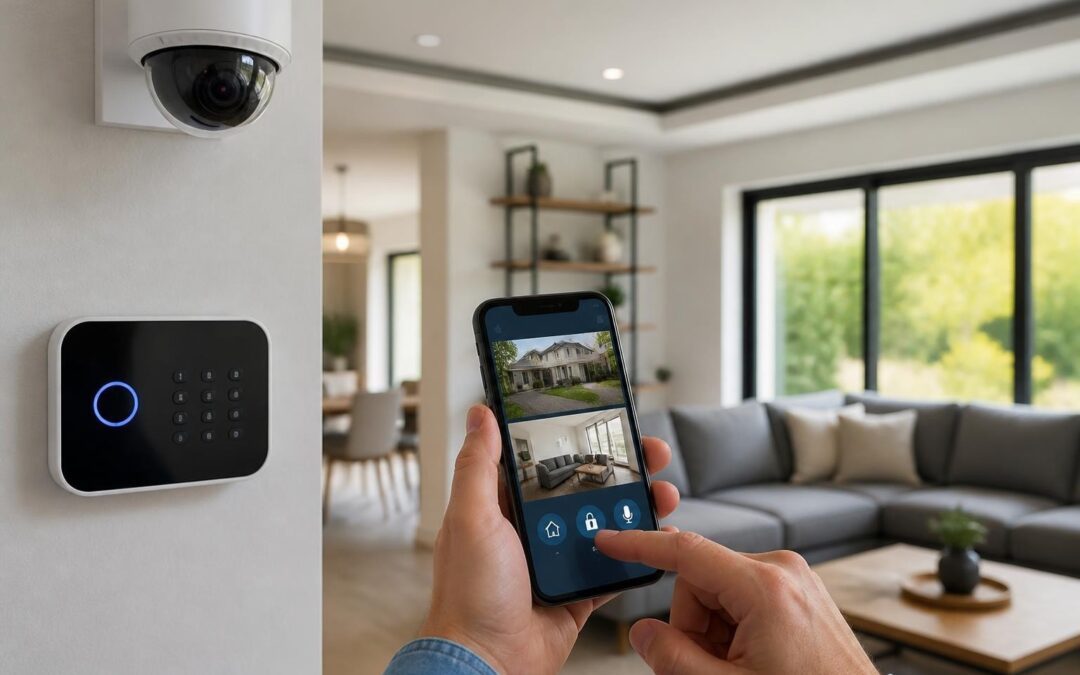
Property protection has evolved far beyond simple locks and bolts. Modern home security and monitoring solutions combine physical deterrents, intelligent sensors, high-resolution cameras and professional oversight to create layered defence systems that respond to threats in real time. Whether you're protecting a family residence on the Sunshine Coast, a commercial property in Brisbane, or an investment portfolio across South East Queensland, understanding how these components work together is essential for making informed decisions about your security infrastructure.
Understanding Integrated Home Security and Monitoring Systems
Today's most effective security solutions don't operate in isolation. A comprehensive home security and monitoring approach connects multiple technologies into a unified platform that detects, records and responds to security events automatically.
Core Components of Modern Security Systems
The foundation of any robust security setup includes several key elements working in concert:
- Perimeter detection through door and window sensors that trigger immediately when entry points are breached
- Motion sensors with pet-immune technology to minimise false alarms whilst maintaining coverage
- High-resolution cameras positioned at strategic points to capture evidence and deter intrusion
- Control panels that serve as the system's brain, processing inputs and coordinating responses
- Communication modules providing dual-path connectivity to ensure monitoring signals reach response centres even if primary networks fail
These components generate exponentially more value when integrated. A door sensor triggering an alarm simultaneously activates nearby cameras to record the event, sends alerts to your mobile device, and notifies a professional monitoring centre – all within seconds.
Professional installation ensures each component is positioned correctly and configured to work with the others. The FTC recommends specific security measures to protect connected devices from unauthorised access, including strong passwords and regular firmware updates.
Wired Versus Wireless Architecture
Choosing between hardwired and wireless systems depends on your property type, budget and security requirements.
| System Type | Best For | Key Advantages | Considerations |
|---|---|---|---|
| Hardwired | New builds, renovations, commercial properties | Maximum reliability, no battery maintenance, tamper-resistant | Higher installation cost, requires wall access |
| Wireless | Existing homes, rental properties, quick deployments | Flexible placement, easier installation, portable | Battery replacement, potential signal interference |
| Hybrid | Most applications | Combines wired backbone with wireless flexibility | Requires experienced design to optimise |
Many professional-grade systems use hybrid architecture, running power and primary communications through cables whilst adding wireless sensors where cable installation is impractical. This approach delivers reliability where it matters most whilst maintaining installation flexibility.

CCTV Camera Technology and Placement Strategy
Video surveillance forms the visual backbone of home security and monitoring, providing both deterrence and evidence collection. Camera technology has advanced dramatically, with 4K resolution, infrared night vision and intelligent analytics now standard in commercial-grade systems.
Resolution and Image Quality Requirements
Camera resolution determines how much detail you can extract from footage. A 2-megapixel camera covers general surveillance, whilst 4-megapixel and 8-megapixel models capture facial features and licence plates from greater distances. Consider mounting heights, viewing angles and the specific details you need to identify when selecting resolution.
Frame rate matters equally. Recording at 15 frames per second saves storage but may miss rapid movement. Critical areas like entry points benefit from 25-30 fps for smooth, detailed playback.
Modern cameras include:
- Wide dynamic range (WDR) for challenging lighting conditions
- Infrared illumination for zero-light recording up to 30 metres
- Motorised varifocal lenses allowing remote zoom and focus adjustment
- Built-in analytics for motion detection zones and line-crossing alerts
- Weatherproof housings rated to IP66 or IP67 standards
Strategic Camera Positioning
Effective surveillance coverage requires thoughtful placement based on threat scenarios rather than simply mounting cameras everywhere.
- Primary entry points – front and rear doors at head height (2.1-2.4 metres) to capture faces clearly
- Vehicle areas – driveways and garages with cameras angled to record number plates and driver-side windows
- Perimeter coverage – property boundaries and fence lines to detect approach before entry attempts
- Interior hallways – choke points that intruders must pass through to access multiple rooms
- High-value storage – offices, safes and equipment rooms requiring audit trails
Overlapping fields of view eliminate blind spots where tampering could occur undetected. The Consumer Reports buying guide provides independent testing data on camera performance across various conditions.
Lighting considerations significantly affect image quality. Infrared works well in complete darkness but creates flat images without depth. Adding subtle external lighting improves colour night footage and acts as an additional deterrent.
Professional Monitoring Services and Response Protocols
Self-monitored systems send alerts to your phone, placing response responsibility entirely on you. Professional monitoring services provide trained operators watching your property 24/7, with established protocols for verification and emergency dispatch.
When your alarm triggers, monitoring centres follow strict verification procedures before dispatching emergency services, dramatically reducing false alarm rates that erode police response priority. Licensed monitoring services typically provide multi-stage response including attempting to contact you, checking secondary sensors to confirm intrusion, and coordinating with local authorities or private security patrols.
For businesses and high-value properties across Brisbane, the Gold Coast and Sunshine Coast, back to base monitoring delivers verified alarm response with fast local dispatch, ensuring someone is always watching even when you're interstate or overseas.

Dual-Path Communication for Reliability
Home security and monitoring systems are only effective if alarm signals reach the monitoring centre reliably. Single-path systems using only your internet connection or phone line create vulnerabilities – a cut cable or network outage leaves you unprotected.
Dual-path systems transmit simultaneously through:
- Primary path (typically broadband internet or NBN)
- Secondary path (mobile network or traditional phone line)
If one fails, the backup ensures continuous connection. The monitoring centre receives immediate notification if either path drops, indicating potential tampering before an intrusion occurs.

Access Control Integration for Complete Protection
Modern home security and monitoring extends beyond intrusion detection to controlling who enters your property and when. Access control systems replace traditional keys with credentials that can be granted, scheduled and revoked instantly.
Access Control Technologies
Different properties require different access solutions:
- Proximity cards and fobs – affordable, easily replaced if lost, ideal for residential units and small offices
- PIN keypads – no physical credential to lose, codes can be temporary or scheduled
- Biometric readers – fingerprint or facial recognition for high-security applications
- Mobile credentials – smartphone-based access using Bluetooth or NFC
- License plate recognition – automated vehicle gates for commercial properties
Integration with CCTV creates powerful audit capabilities. Every access event automatically triggers cameras to record who entered, when and where, creating tamper-proof logs for security reviews or investigations.
Zone-Based Access Management
Larger properties benefit from zoned access where credentials grant different levels of permission. A tradesperson might access a building lobby and specific work areas whilst being restricted from office zones or storage rooms. Time-based scheduling ensures contractor credentials work only during agreed hours.
This layered approach appears in:
- Residential body corporate buildings with separate access to lobbies, lifts, amenity areas and individual units
- Commercial offices with visitor access to reception but restricted access to server rooms and warehouses
- Industrial sites with contractors limited to specific zones whilst employees access the full facility
Data Privacy and Cybersecurity Considerations
Connected home security and monitoring systems introduce cybersecurity vulnerabilities that traditional alarms never faced. Cameras, sensors and control panels connected to the internet can potentially be accessed by unauthorised parties if not properly secured.
Protecting Your Security Infrastructure
Research from the SANS Institute outlines practical steps for securing home IoT networks, many directly applicable to security systems:
- Network segmentation – place security devices on a separate VLAN or guest network isolated from personal computers and phones
- Strong authentication – change all default passwords to unique, complex credentials; enable two-factor authentication where available
- Firmware updates – regularly update camera and control panel firmware to patch known vulnerabilities
- Encrypted storage – ensure recorded footage is encrypted both in transit and at rest
- Local recording options – consider systems offering local storage in addition to cloud backup for sensitive footage
The FTC’s 2024 Privacy and Data Security Update documents enforcement actions against security device manufacturers with inadequate privacy protections, highlighting the importance of choosing reputable brands with strong security track records.
Understanding Data Collection and Sharing
Security systems collect sensitive data about your property, routines and behaviour patterns. Before selecting a platform, understand:
- What data is collected beyond video and alarm events
- Where footage is stored and for how long
- Who has access to your recordings (manufacturer, monitoring service, law enforcement)
- How data is used for product improvement or marketing
- Your ability to delete footage and account data
The Electronic Frontier Foundation’s analysis of security camera privacy demonstrates the tradeoffs between convenience features and data protection, particularly regarding third-party sharing arrangements with law enforcement.
System Design for Scalability and Future Expansion
Effective home security and monitoring solutions grow with your needs rather than requiring complete replacement when requirements change. Professional system design considers not just current coverage but anticipated expansion.
Planning for Growth
A young family in a three-bedroom home might initially install cameras at front and rear entries with basic intrusion detection. As children grow and valuable assets accumulate, the system expands to include:
- Additional cameras covering side access and vehicle areas
- Glass-break sensors for ground-floor windows
- Smoke and environmental monitoring integration
- Upgraded recording capacity and longer retention periods
Systems built on scalable platforms accommodate this growth through simple additions rather than costly replacements. Open protocol systems using standards like ONVIF for cameras allow mixing brands and upgrading components independently.
| Expansion Type | Planning Considerations | Typical Timeline |
|---|---|---|
| Additional cameras | Verify network capacity, storage requirements | 1-3 years |
| Zone expansion | Assess panel capacity, sensor compatibility | 2-5 years |
| Integration (access, intercom) | Confirm platform supports protocols | 3-7 years |
| Technology refresh | Budget for periodic upgrades | 5-10 years |
Professional Design Versus DIY
Whilst DIY security packages offer immediate affordability, professional design delivers long-term value through proper component selection, optimal placement and reliable installation. Licensed installers understand Australian Standards, local regulations and integration requirements that affect system performance and insurance compliance.
Professional installation typically includes site assessment, custom design documentation, certified cabling work and comprehensive testing before handover. This approach ensures your home security and monitoring investment performs reliably from day one and scales efficiently as needs evolve.
Environmental and Life Safety Integration
Modern security platforms extend beyond intrusion detection to monitor environmental threats and life safety hazards. Integrated sensors detect smoke, carbon monoxide, flooding and temperature extremes, triggering appropriate responses through the same infrastructure.
Multi-Hazard Detection
Comprehensive protection monitors threats from multiple sources:
- Smoke and heat detectors linked to monitoring for automatic fire brigade dispatch
- Carbon monoxide sensors in garages and near fuel-burning appliances
- Water leak detectors under hot water systems, washing machines and near valuable equipment
- Temperature monitoring for freezer failures, heating malfunctions or pipe freeze risks
- Medical alert integration for elderly residents or those with health conditions
These sensors communicate through the same control panel and monitoring service as intrusion detection, creating a unified safety platform rather than multiple disconnected systems.
When environmental sensors trigger, the system can automatically execute programmed responses such as shutting off water mains, alerting neighbours, or unlocking doors for emergency responder access.
Mobile Access and Remote Management
Contemporary home security and monitoring puts complete system control in your pocket through mobile applications that connect to your security platform from anywhere with internet access.
Real-Time Monitoring and Control
Modern apps provide far more than simple alarm notifications:
- Live camera viewing from any connected camera with pan-tilt-zoom control
- Playback and download of recorded footage filtered by camera, time and event type
- Arm and disarm the alarm system remotely with activity logs showing who accessed when
- Temporary access codes for visitors, tradespeople or service providers
- Custom notifications for specific events like certain doors opening or cameras detecting motion in defined zones
Push notifications with video clips allow immediate assessment of alerts. A motion alert shows you instantly whether movement is a delivery driver, wildlife or an actual security concern, enabling appropriate response without false emergency calls.
Geographic automation can arm your system when you leave a defined area and disarm when you return, removing the risk of forgetting to secure your property.

Compliance and Insurance Considerations
Insurance companies recognise that professional home security and monitoring reduces claim risk and often provide premium discounts for verified systems. Understanding these requirements ensures your investment qualifies for maximum benefit.
Insurance Discount Requirements
Most insurers require specific features before approving security discounts:
- Professionally installed and monitored systems (DIY typically doesn't qualify)
- Back-to-base monitoring with verified response protocols
- Certification that installation meets Australian Standards
- Regular maintenance and testing documentation
- Notification to insurer before installation with system specifications
Discounts typically range from five to fifteen percent of building and contents premiums, potentially offsetting monitoring costs entirely. Some insurers mandate security systems for high-value properties or in areas with elevated crime rates.
Regulatory Compliance for Commercial Properties
Business properties face additional compliance obligations. Security systems must align with workplace health and safety requirements, privacy legislation regarding employee monitoring, and industry-specific regulations for sectors handling sensitive information.
Licensed installers ensure systems meet these obligations from design through commissioning, providing documentation required for insurance claims, legal compliance and potential litigation defence.
Maintenance and System Testing Protocols
Even the most sophisticated home security and monitoring system requires regular maintenance to ensure reliable operation when needed. Batteries expire, sensors accumulate dust, and software requires updates.
Recommended Maintenance Schedule
Establish a routine maintenance calendar:
- Monthly: Test all sensors by triggering them deliberately; verify monitoring centre receives signals; check mobile app notifications
- Quarterly: Inspect camera lenses for dirt or spider webs; verify night vision operation; review recording quality
- Annually: Replace backup batteries in wireless sensors; professional service call for complete system inspection; update firmware across all devices
- As needed: Clean camera housings; adjust camera angles after landscape changes; add zones or devices as requirements evolve
Professional service agreements include scheduled maintenance visits, priority response for faults, and discounted rates on additions or upgrades. These agreements protect your investment and ensure warranty compliance for commercial-grade equipment.
Testing procedures should include deliberate alarm activation during both day and night hours to verify all notification paths function correctly. Coordinate tests with your monitoring service to avoid unnecessary dispatch whilst confirming they receive and process your signals appropriately.
Many modern systems include self-diagnostic features that alert you to sensor failures, low batteries or communication issues before they compromise protection. Enable these notifications and respond promptly to maintain full coverage.
Effective security combines technology, professional design and ongoing management to protect what matters most. Whether you need basic intrusion detection for a residence or comprehensive surveillance and access control for commercial property, the right system scales with your requirements whilst delivering reliable protection today. Dynamic Data & Security has served Brisbane, the Gold Coast and the Sunshine Coast for over two decades, designing integrated solutions using trusted brands and backed by licensed installation and 24/7 monitoring capabilities that adapt as your security needs evolve.

Recent Comments