
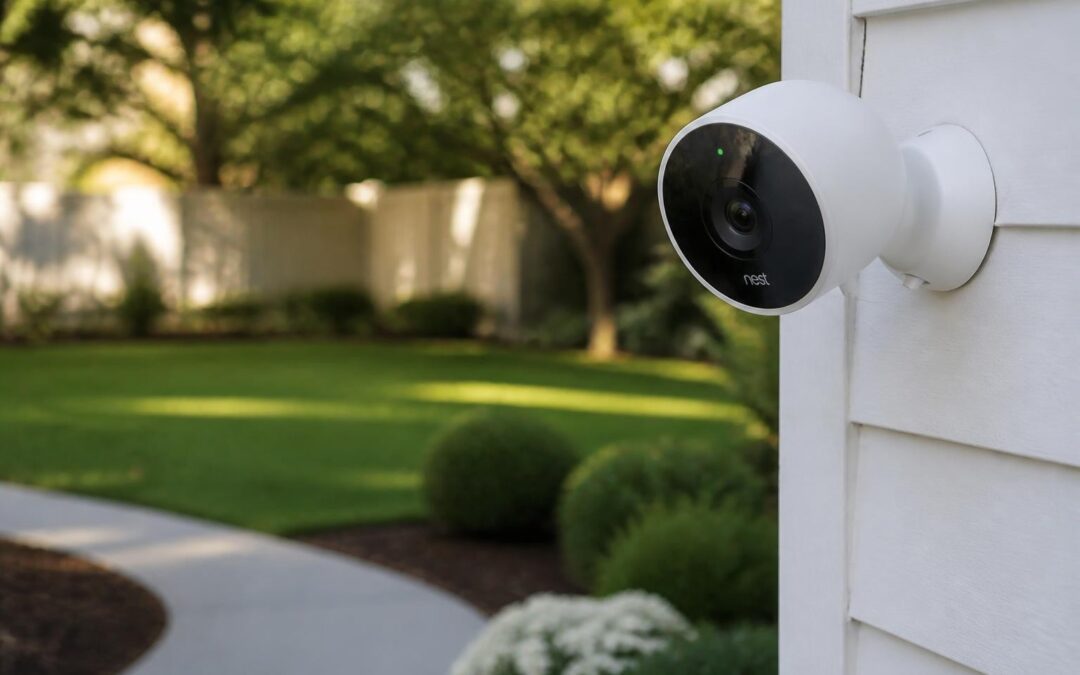
Walk into any homeware store or scroll any marketplace and you’ll find a wall of outdoor smart cameras promising an easy fix for home security. Nest, Ring, Arlo and a dozen similar brands all sell the same pitch: stick it above the door, connect it to your Wi-Fi, and watch your property from your phone. For a lot of South East Queensland homes, that pitch works, at least for a while. The part nobody mentions on the packaging is what Brisbane’s heat, humidity and storm season do to that gear over a year or two of actual outdoor use.
This isn’t an argument against consumer cameras. Used well, they’re a genuinely useful layer in a home security setup. But there’s a real difference between a battery-powered Wi-Fi camera doing its best in the weather and a properly designed CCTV security camera installation built for the conditions it’s actually going to face. Knowing where one ends and the other begins matters if you want cameras that are still working when you need them.
What Off-the-Shelf Outdoor Cameras Are Genuinely Good For
Credit where it’s due, this generation of consumer cameras solved a real problem. They’re quick to install, don’t need cabling run through the wall, and give you a live view and motion alerts on your phone within minutes of opening the box. For a lot of situations, that’s exactly the right tool:
- Checking on a holiday home on the Sunshine Coast between bookings, without paying for a full installed system on a property you only use part-time
- A quick view of the front door or driveway to see who’s dropped by, or to keep an eye on deliveries
- Renters who can’t run cable or make permanent changes to the property
- A low-cost second layer on top of an existing system, covering a spot the main cameras don’t quite reach
For all of these, a Nest-style camera does the job it was built for. The trouble starts when people expect it to do the job of a full security system, which is a different job entirely.
Where Brisbane’s Climate Starts Working Against Them
Consumer outdoor cameras are engineered for a global market, tested to an IP rating and a general temperature range that looks fine on a spec sheet. South East Queensland conditions are harder on that gear than most of the markets those ratings were written for.
UV and Heat
Brisbane gets some of the harshest UV exposure of any capital in the country, and a north or west-facing eave can sit well above 40°C for months of the year. Plastic camera housings, seals and lens covers weren’t built for that kind of sustained exposure. Over a year or two you’ll typically see housings yellow, go brittle, or start showing hairline cracks. Batteries fare worse: lithium battery chemistry degrades faster in sustained heat, so a camera rated for months between charges in a mild climate might need charging every few weeks once it’s baking on a Queenslander’s verandah through summer.
Humidity and Seals
Most consumer outdoor cameras rely on rubber gaskets and glued seams to keep moisture out. Brisbane’s humidity, especially through summer’s wet season, works those seals harder than a drier climate would. Once a seal starts to fail, condensation inside the housing fogs the lens or gets into the electronics, and that’s usually the end of the unit.
Salt Air on the Coast
Anything mounted within a few kilometres of the water on the Gold Coast or Sunshine Coast is dealing with airborne salt, and salt is brutal on metal fittings, screws and connectors. Consumer camera mounts are rarely built with marine-grade hardware, so corrosion on brackets and connection points is a common failure point on coastal properties, sometimes within the first year.
Storm Season Dropouts
This is the one that actually matters most for security. Almost every consumer outdoor camera depends on your home Wi-Fi and mains power to record and send alerts, with footage stored in the cloud. Queensland’s storm season brings exactly the two things that break that chain: power outages and internet dropouts. A cloud-only camera with no local storage and no backup power goes dark in precisely the conditions, storms, break-ins during outages, opportunistic activity when a street’s power is down, when you most need it recording.
The Gap Between a Consumer Camera and a Proper System
A wired CCTV system with cameras built to Australian Standards, local recording, and its own power backup doesn’t have that weak point. Camera placement matters just as much as the hardware, and it’s worth getting right whether you’re running a consumer camera or a full system. Our guide to where security cameras should be placed covers the angles and blind spots that catch most DIY installs out, entry points left uncovered, glare from morning sun, cameras mounted too high to get a usable face shot.
The other gap is what happens after a camera detects something. A Nest-style camera can send you a push notification. A properly integrated system can trigger an alarm, alert a monitoring centre, and log the event against your access control, all from the one trigger, because the components are designed to talk to each other rather than sit in separate apps.
Can a Consumer Camera Be Part of a Monitored System?
Sometimes, but with real limits. Most consumer ecosystems are closed by design, they’re built to talk to their own app and their own cloud, not to a third-party alarm panel or a back-to-base monitoring service. A handful of professional-grade Wi-Fi cameras can be added as a supplementary feed, but for genuine monitored security, where an alarm event brings a camera up automatically and a monitoring centre can verify what’s happening in real time, you need cameras and sensors that were specified to work together from the start.
That’s really the honest way to think about it. A Nest camera on the porch isn’t a mistake, it’s a reasonable extra layer. It’s just not a substitute for the wired, monitored backbone that keeps working when the Wi-Fi and power don’t.
Building a Setup That Actually Suits Your Property
For most SEQ homes, the smart approach is layered rather than all-or-nothing. A consumer camera can cover a quick-view spot, a side gate, a granny flat, while the property’s main entry points, driveway and perimeter run on a properly installed, monitored system built for our climate and our storm season. This is the model more new homeowners across Brisbane are landing on, and it’s worth reading why in our piece on why new Queensland homeowners are choosing integrated alarm and camera systems over a shed full of separate gadgets.
If you’re weighing up a DIY camera against a proper install, or you’ve already got a few battery cameras failing on you after a Queensland summer, it’s worth getting a second opinion on what your property actually needs. Dynamic Data & Security has been installing and monitoring security systems across Brisbane, the Gold Coast and the Sunshine Coast for more than 20 years, with licensed technicians who know exactly what this climate does to gear over time. Call 07 5453 7240 or email info@dyndata.com.au for a straight assessment of what will actually hold up on your property.
Recent Comments