
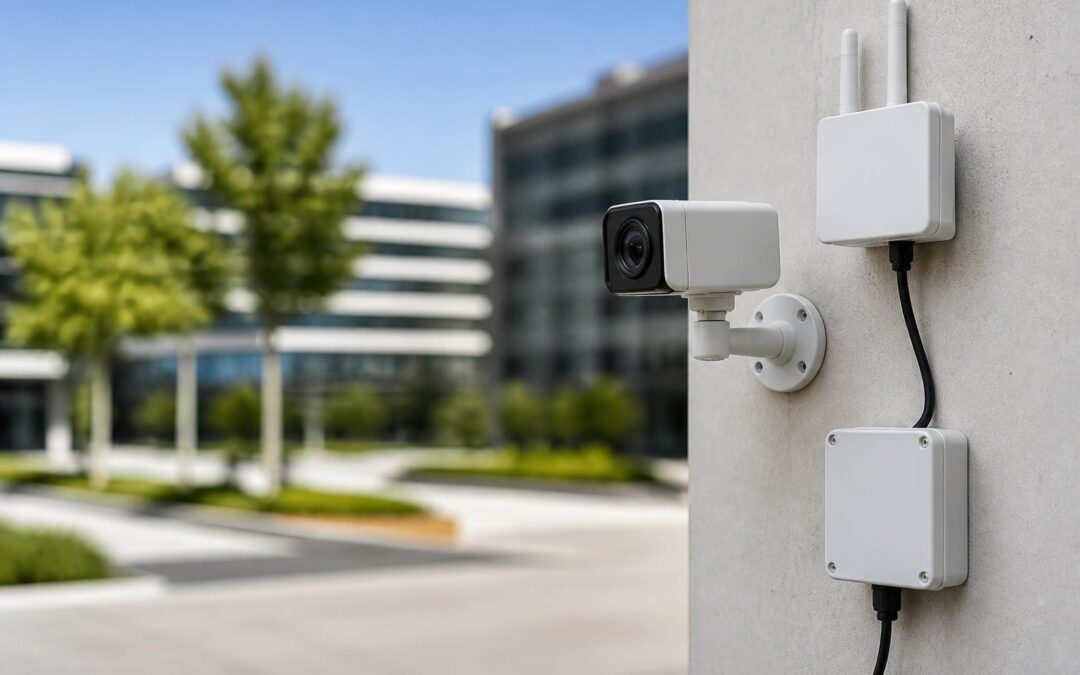
Small wireless cameras get marketed hard online: battery powered, hidden inside a smoke detector or a USB charger, no cabling, set up in five minutes. For a handful of specific jobs around a South East Queensland home or small business, they genuinely do the job well. For anything you actually rely on to catch a break-in, cover a warehouse dock, or hold up through a Brisbane summer, they’re the wrong tool for the job. Here’s where the technology actually sits, and where it doesn’t.
What Micro Wireless Cameras Are Genuinely Good For
These cameras earn their place as a supplementary layer, not a primary system. The jobs they’re actually suited to are narrow and short-term:
- Keeping an eye on a nanny, cleaner or tradesperson working alone in the house for a few hours
- A second angle on a till or stockroom door that your main retail camera system doesn’t quite reach
- A short-term check on a holiday rental in Noosa, Coolangatta or the hinterland between guest turnovers
- Watching a specific trouble spot, a side gate, a shed, a mailbox, for a trial period before you commit to running proper cabling there
In every one of these cases the micro camera is filling a gap next to something else, not carrying the security load on its own. If you’re weighing up a small wireless unit against a proper smart camera for the house, it’s worth reading through the trade-offs around smart home cameras and privacy before you decide, because the same limitations apply, just more so.
Where the Technology Runs Into Its Limits
Battery Life and Range
A battery-powered micro camera has to trade off resolution, recording frequency and range against how long it runs before you’re back up a ladder or behind a light switch changing it out. Motion-activated units that record in short bursts might last a few weeks. Anything set to record continuously, or with night vision running often, can be flat in days. Range is the other constraint: most of these units rely on 2.4GHz Wi-Fi and are only rated for line-of-sight distances that shrink fast once there’s a wall, a fence or a bit of distance involved.
Storage and Footage You Can Actually Use
Most micro cameras store footage on a microSD card or push it to a cloud subscription. Card storage means the footage is sitting on the device itself, useless if the camera is found, moved or stolen, and it’s easy to overwrite the one clip you actually needed. Cloud storage solves that but usually comes with a monthly fee and depends entirely on your home internet staying up. Image quality is the other trade-off: a small sensor and a small, cheap lens in a housing the size of a coin will never match what a proper fixed or PTZ camera can pull in low light, and footage that’s too grainy to make out a face or a numberplate isn’t much use as evidence.
Queensland Heat, Humidity and What They Do to Small Electronics
This is the part generic buying guides never mention, and it matters here more than in most of the country. A micro camera sitting on a north-facing windowsill, in a roof cavity, or mounted outside under direct sun in a Brisbane or Ipswich summer is routinely sitting in housing temperatures well above what its small lithium battery cell and plastic casing were designed for. Heat shortens battery life, can trigger thermal shutdowns at the worst possible moment, and over time makes cheap plastic housings brittle and prone to cracking.
Humidity is the other local factor, particularly for anything installed closer to the coast on the Gold Coast or Sunshine Coast. Cheap wireless electronics that aren’t properly sealed are vulnerable to moisture ingress and salt air corrosion on their internal contacts, which shows up as intermittent connection drops or a camera that simply stops reporting in after a few months. None of this is usually covered by the kind of short warranty these budget units come with.
Wi-Fi Range in Besser-Block and Double-Brick Homes
A lot of older Brisbane housing stock, particularly besser-block homes and double-brick construction common through the inner and middle suburbs, plays havoc with Wi-Fi signal. Dense masonry attenuates a 2.4GHz signal far more than the timber-frame Queenslander next door, and a micro camera mounted in a shed, at a side gate or down near a driveway is often just outside reliable range of the router, even when the distance on paper looks fine. The result is dropped connections, missed motion alerts and gaps in the recording right when something actually happens. This is one of the main reasons wireless-only setups struggle as a whole-property solution, and why outdoor units in particular need a proper look at signal strength and mounting position before they go in, something covered in more detail in our piece on outdoor smart cameras.
The Legal Line: Recording People Without Consent
Queensland has real legal limits around covert recording, and they’re not something to guess at. Recording audio without consent, and recording people in places where they’d reasonably expect privacy, such as bathrooms, bedrooms, change rooms or areas within a rented property that a tenant or guest occupies, can cross into unlawful surveillance territory regardless of your intentions. This applies whether the camera is disguised as something else or simply out of sight. If you’re considering a hidden camera for a specific situation involving another person, particularly around staff, tenants, or shared premises, get proper legal advice for your specific circumstances before you install anything. This guide is general information, not legal advice.
Where a Micro Camera Fits Into a Proper Security System
None of this means micro cameras are pointless, it means they’re a supplement, not a foundation. A properly designed system for a South East Queensland home or business is built around fixed, wired cameras with the resolution, night vision and weatherproof housing to actually hold up outdoors year-round, tied into access control and alarms so everything talks to each other and reports back to monitoring if something trips. A small wireless unit can sit alongside that system to cover one specific gap, but it shouldn’t be asked to do the job of the whole thing.
If you’re weighing up what your property actually needs, from a single supplementary angle through to a fully integrated setup, our team has been designing and installing CCTV and security camera systems across Brisbane, the Gold Coast and the Sunshine Coast for over 20 years, built to Australian Standards and backed by manufacturer warranties that actually mean something in this climate. Give us a call on 07 5453 7240 or email info@dyndata.com.au and we’ll talk through what’s realistic for your property before you spend money on the wrong solution.
Recent Comments