
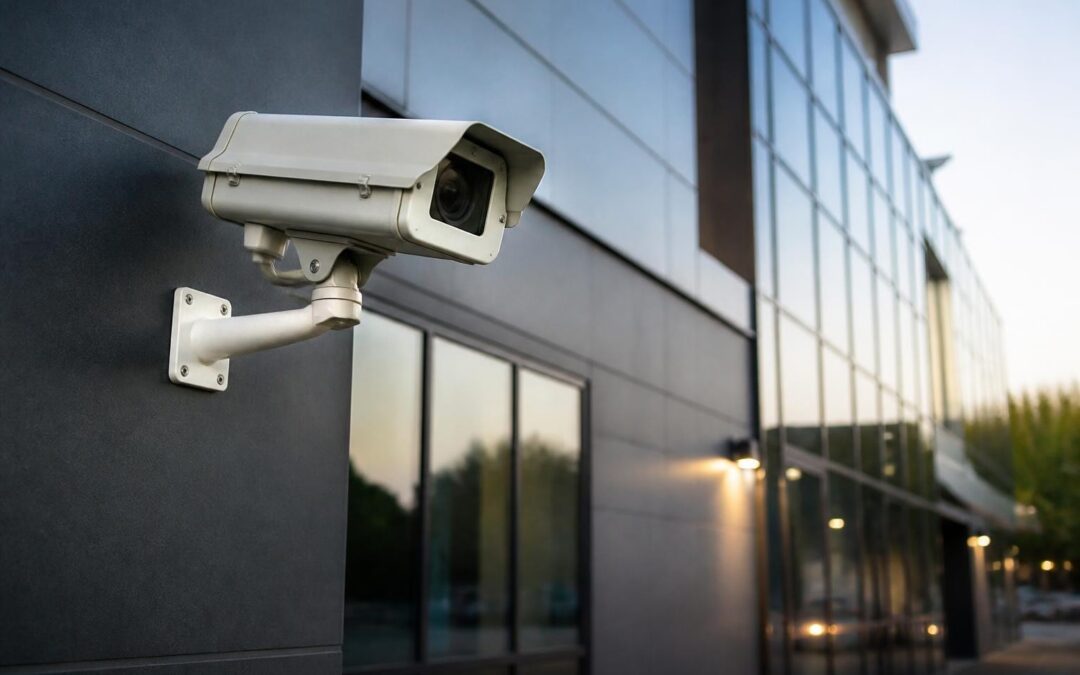
An outdoor camera system that works fine in a showroom or a mild-climate state doesn’t always hold up on a Queensland roofline. South East Queensland throws three things at outdoor CCTV that a lot of budget systems aren’t built for: sustained UV and heat, salt-laden air along the coast, and storm season downpours with the power outages that come with them. If you’re a business owner in Brisbane, the Gold Coast or the Sunshine Coast weighing up an outdoor camera install, this is what actually matters before you sign off on a quote.
What a Proper Outdoor Commercial System Needs
Outdoor cameras for a business site aren’t the same product as a $60 camera from a hardware store, even if they look similar in a brochure. A commercial-grade outdoor system needs to be planned around the site, not just bolted on wherever it’s convenient to run a cable.
IP Rating and Housing Quality
Look for cameras rated at least IP66, which means they’re sealed against dust and can handle heavy rain and pressure-washing without water getting into the housing. IP67 or higher is better again for anything exposed to direct weather. The IP rating on the spec sheet only tells you half the story though, the housing material matters just as much. Cheap polycarbonate housings can go brittle and yellow within a couple of years under Queensland sun, which cracks seals and lets moisture in. Aluminium or better-grade polycarbonate housings with UV-stabilised coatings last a lot longer in this climate.
Mounting and Coverage Planning
Camera placement isn’t just “point it at the door.” A proper install accounts for sun glare at different times of day, wind loading on poles and eaves, and lines of sight that won’t be blocked once trees grow or a new delivery truck is parked in the wrong spot. For businesses with carparks, loading docks or long perimeter fences, that means mapping out overlapping fields of view rather than relying on one or two cameras to cover everything. If you want a practical breakdown of where cameras should actually go on a commercial site, our guide on CCTV placement for entries, carparks and blind spots covers the detail.
- Entry and exit points, angled to capture faces and number plates, not just the tops of heads
- Carpark and loading areas, with wide coverage to avoid gaps between cameras
- Perimeter fencing and side access points that don’t get eyes on them otherwise
- Stock and storage areas, particularly for warehouses and retail backrooms
Local Conditions That Change the Spec
This is the part a lot of generic camera advice skips over, and it’s the difference between a system that lasts a decade and one you’re replacing in three years.
UV and Heat Degradation
Brisbane, the Gold Coast and the Sunshine Coast all get long stretches of high UV exposure, and outdoor housings that aren’t properly UV-stabilised will degrade faster here than the same product would in a cooler climate. Seals harden and crack, plastic housings discolour and weaken, and internal components run hotter for longer through summer. This is why manufacturer warranty length is worth checking before you buy, a housing backed by a genuine long-term warranty (some of what we install carries 15 years through to lifetime cover) is a reasonable proxy for build quality, because manufacturers don’t offer that on gear they expect to fail.
Coastal Salt Corrosion
For businesses within a few kilometres of the coast on the Gold Coast or Sunshine Coast, salt air is a genuine problem for camera housings, brackets and cabling. Standard mounting hardware corrodes faster near the water, and cheap metal components can seize or fail within a year or two. Marine-grade or corrosion-resistant fittings cost more up front but avoid a callout every time a bracket rusts through. If your site is beachfront, on a high-rise, or on an exposed coastal strip, this should be raised with your installer before the quote is finalised, not discovered after the first install.
Storm Season, Surge Protection and Backup Power
Storm season brings lightning strikes, voltage surges and power outages, sometimes all in the same week. Outdoor cameras and the cabling running to them are exposed to surge risk through both the power supply and any data lines. Proper surge protection at the camera end and at the recorder or NVR reduces the chance of losing a run of cameras (or the whole system) after one bad storm. It’s also worth having a battery backup or UPS on the recording equipment, so a brief outage doesn’t mean a gap in footage right when something happens. This matters more for coastal and rural-edge properties around the Sunshine Coast hinterland and outer Gold Coast, where outages tend to run longer than they do closer to the CBD.
Coverage for Carparks, Perimeters and Loading Areas
A lot of Brisbane’s industrial estates, Gold Coast retail strips and Sunshine Coast trade precincts have the same problem: large open areas that are expensive to cover properly and easy to under-spec. Carparks need wide-angle coverage with enough resolution to actually read a number plate, not just show a blurry car shape. Loading docks need angles that capture both vehicles and people moving between them, since that’s where a lot of stock loss happens unnoticed. Perimeter fencing on larger sites often benefits from a mix of fixed wide cameras and one or two PTZ (pan-tilt-zoom) units that can be directed toward an alert. We’ve gone into more depth on why this matters for warehouse operations specifically in our piece on business security camera installation and warehouse loss prevention in SEQ.
Licensed Installation Standards
Queensland requires security installers to hold the correct Security Provider Licence, and for good reason. It’s not just a compliance box to tick, a licensed installer knows how to run cabling to code, earth equipment correctly, integrate the system with existing alarms or access control, and avoid the kind of shortcuts that cause problems down the track (like data cables run alongside power lines, or housings mounted without proper weatherproofing at cable entry points). Systems built to Australian Standards also tend to hold up better to insurance scrutiny if you ever need footage to support a claim.
If you’re weighing up a new outdoor system or replacing an ageing one, it’s worth starting from what your site actually needs rather than a generic camera count. Our CCTV and security camera installation team works across Brisbane, the Gold Coast and the Sunshine Coast and can walk the site with you before anything gets quoted.
Getting It Right the First Time
Outdoor commercial CCTV is one of those things that’s expensive to get wrong twice. Housings that fail under UV, brackets that corrode near the coast, and systems with no surge or backup protection all end up costing more in repeat callouts than a properly specified system would have cost up front. If you’re planning an outdoor install or reviewing an existing one, get a local assessment rather than relying on a generic spec sheet. Call 07 5453 7240 or email info@dyndata.com.au to talk through what your site actually needs.
Recent Comments