
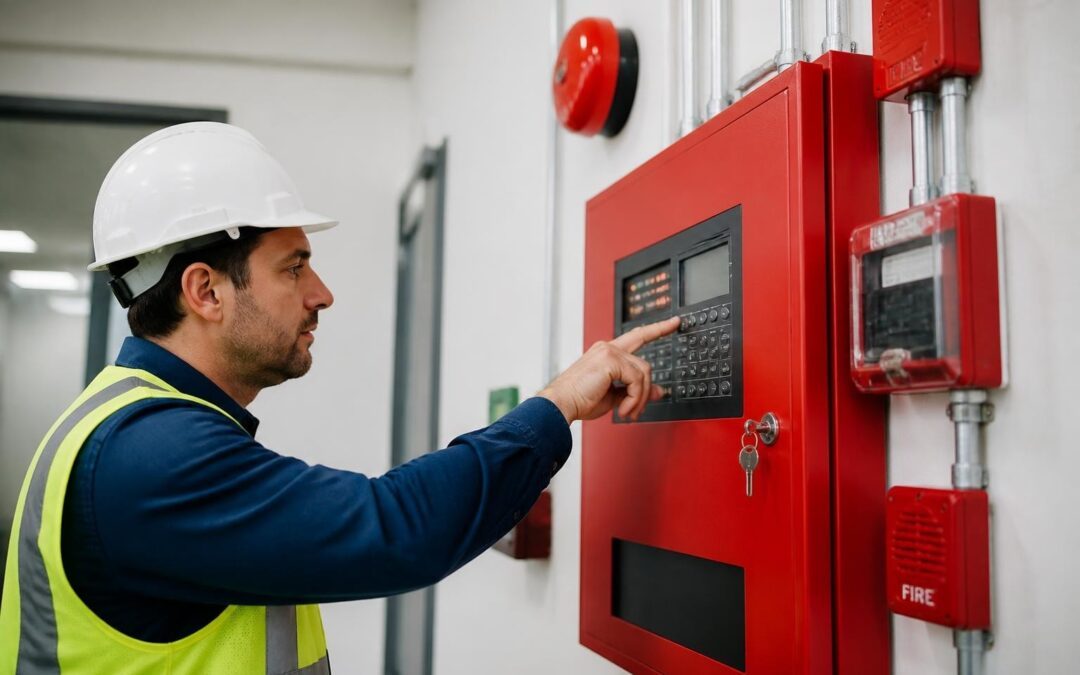
Protecting lives and property from fire hazards requires more than just installing smoke detectors throughout a building. Modern fire alarm installation demands careful planning, adherence to Australian Standards, and integration with broader security infrastructure to create comprehensive protection. Whether you're fitting out a new commercial space, upgrading an existing system, or ensuring compliance across multiple sites, understanding the fundamental requirements and best practices ensures your fire alarm system performs reliably when it matters most.
Understanding Fire Alarm System Components
A properly designed fire alarm system comprises multiple interconnected elements that work together to detect, alert, and respond to fire emergencies. The fire alarm control panel serves as the system's brain, monitoring all connected devices and coordinating responses. This panel communicates with detection devices, notification appliances, and monitoring services to provide comprehensive coverage.
Detection devices include smoke detectors, heat sensors, and manual call points strategically positioned throughout the facility. Notification appliances such as sirens, strobes, and voice evacuation systems ensure occupants receive clear warnings regardless of their location or accessibility needs. Modern systems also integrate with building management systems, emergency lighting, and access control to create coordinated emergency responses.
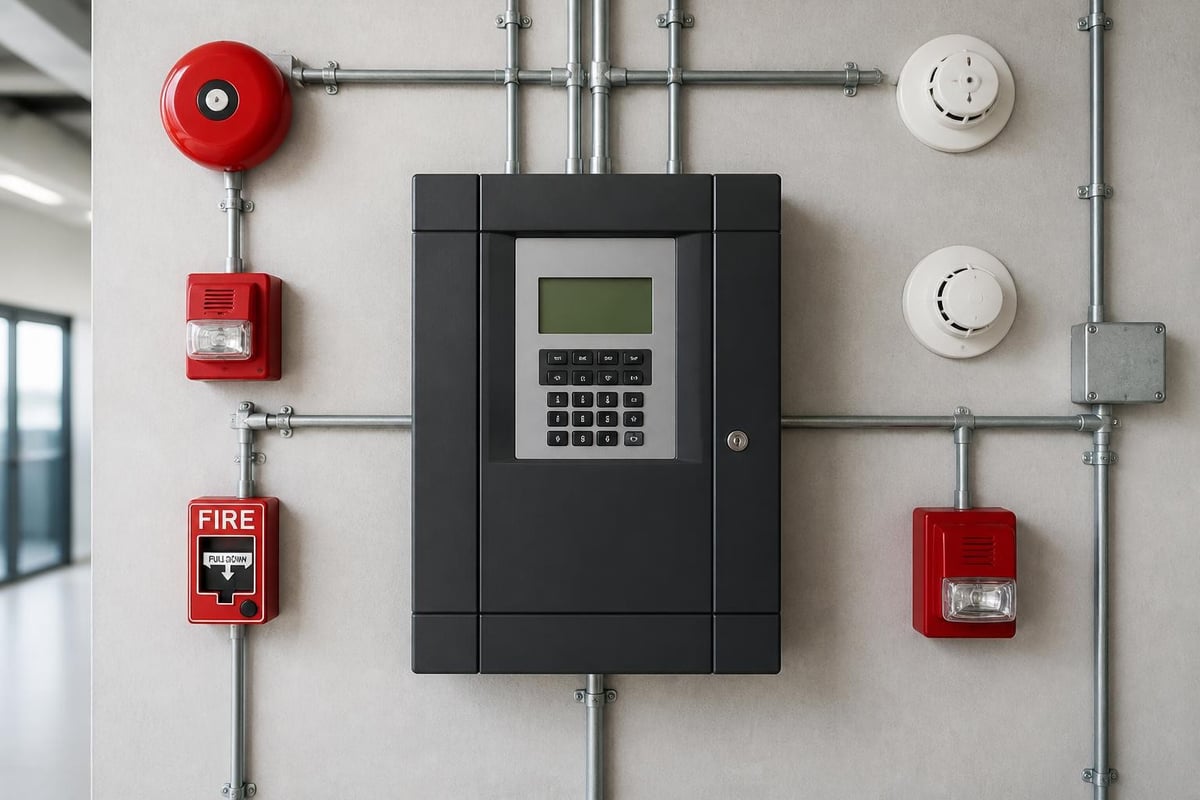
The quality of components directly impacts system reliability. Professional installers typically specify commercial-grade equipment from established manufacturers that meet Australian Standards and provide long-term support. This investment ensures consistent performance and simplifies future maintenance and expansion.
Compliance Requirements and Australian Standards
Fire alarm installation must comply with multiple regulatory frameworks to ensure safety and legal operation. The National Construction Code (NCC) establishes baseline requirements for fire safety systems in different building classifications. These requirements vary significantly based on building type, occupancy load, and intended use.
AS 1670 governs fire detection, warning, control and intercom systems installation across Australia. This standard specifies design requirements, installation practices, commissioning procedures, and ongoing maintenance obligations. Understanding NEC requirements for fire alarm systems provides additional insight into electrical safety considerations, though Australian installations must primarily reference local standards.
Licensing and Certification
Only licensed professionals can legally perform fire alarm installation work. In Queensland, this requires appropriate electrical licensing and fire protection qualifications. Installers must also hold current public liability insurance and maintain registration with relevant industry bodies.
Key compliance checkpoints include:
- Building permit approval before installation commences
- Use of approved components meeting Australian Standards
- Proper cable ratings and installation methods
- Adequate power supply and battery backup capacity
- Documentation including as-built drawings and commissioning certificates
- Annual inspection and testing by qualified technicians
Local councils and fire services maintain specific requirements beyond baseline standards. Consulting with authorities during the design phase prevents costly retrofits and ensures smooth approval processes.
Strategic Device Placement and Coverage
Effective fire alarm installation depends heavily on strategic device placement throughout the protected area. Fire alarm device placement and spacing requirements provide detailed guidelines, but practical application requires understanding your specific environment.
Smoke detectors typically require spacing no greater than 10 metres apart in standard ceiling heights, with adjustments for irregular spaces, high ceilings, or areas with significant airflow. Heat detectors suit environments where smoke detectors would generate false alarms, such as kitchens, workshops, or areas with steam and dust.
| Device Type | Typical Spacing | Best Applications | Considerations |
|---|---|---|---|
| Photoelectric Smoke | 10m maximum | General areas, corridors | Affected by airflow |
| Ionisation Smoke | 10m maximum | Areas with flaming fire risk | Less common in Australia |
| Heat Detectors | 5-7m maximum | Kitchens, garages, dusty areas | Slower response time |
| Multi-sensor | 10m maximum | Mixed environments | Higher cost, better reliability |
Manual call points must be positioned at all exits and escape routes, typically at heights between 900mm and 1200mm from floor level. These devices should be clearly visible and accessible without obstruction. Each floor level requires sufficient coverage to ensure occupants can quickly activate the alarm when discovering fire.
Special Considerations for Different Environments
Commercial kitchens require heat-based detection rather than smoke sensors to prevent constant false alarms. Warehouses with high ceilings need beam detection or aspirating smoke detection systems that can identify smoke before it disperses. Server rooms and data centres benefit from very early warning aspirating detection that identifies combustion particles before visible smoke develops.
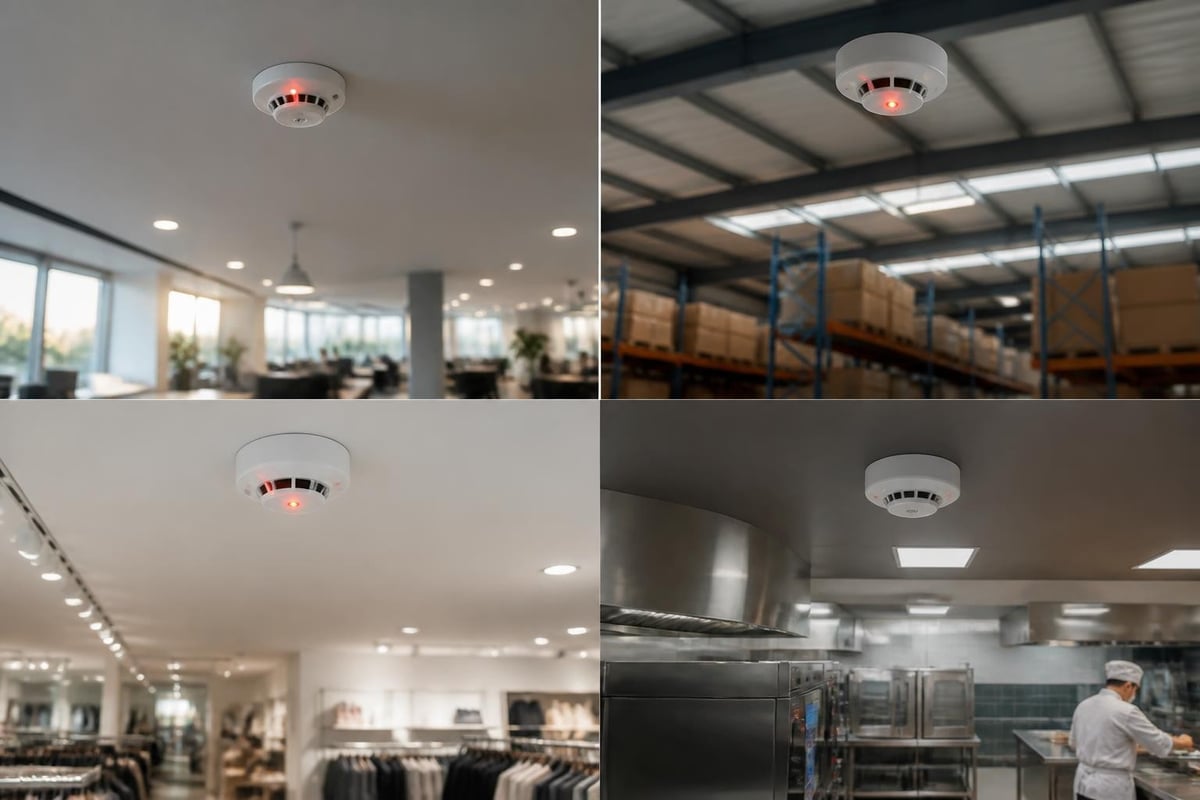
Sleeping areas in accommodation facilities require interconnected smoke alarms with audiovisual notification to ensure occupants wake during emergencies. Smoke alarm installation tips highlight the importance of proper bedroom coverage, though commercial installations face more complex requirements than residential settings.
System Design and Integration Capabilities
Modern fire alarm installation extends beyond standalone detection systems to encompass broader building safety integration. Professionally designed systems interface with access control, CCTV surveillance, emergency lighting, and building automation to create coordinated emergency responses. When fire alarms activate, integrated systems can automatically unlock access-controlled doors, illuminate emergency exit paths, shut down ventilation systems, and direct security cameras toward the alarm source.
This integration provides significant operational benefits. Security personnel receive visual verification of alarm conditions through connected CCTV, reducing false alarm responses whilst accelerating genuine emergency response. Access control integration ensures safe egress whilst maintaining security in unaffected building areas. These capabilities are particularly valuable across multi-tenant commercial properties and industrial facilities where coordinated responses protect both people and assets.
For businesses requiring comprehensive protection, Security & Alarm Systems delivered by experienced installers can incorporate fire detection alongside intrusion detection and access control within unified platforms that simplify management and reduce infrastructure costs.
Power Supply and Backup Requirements
Reliable fire alarm installation demands robust power infrastructure with comprehensive backup capabilities. Primary power typically connects to dedicated electrical circuits with appropriate circuit protection. These circuits should not share loads with general building power to prevent nuisance trips from affecting life safety systems.
Battery backup systems must provide:
- Minimum 24 hours standby power during mains failure
- Sufficient capacity to operate all notification appliances for required duration
- Automatic changeover without system interruption
- Low battery warnings with adequate advance notice
- Regular testing capability to verify backup capacity
Fire alarm control panel installation tips emphasise the importance of proper power supply sizing. Under-specified backup systems represent a common installation deficiency that only becomes apparent during extended power outages or emergency conditions.
Larger installations may incorporate multiple power supplies with redundant battery banks to ensure continuous operation. Critical facilities such as hospitals, aged care centres, and emergency services buildings require enhanced backup duration and redundancy levels specified in their fire safety schedules.
Installation Best Practices for Power Systems
Control panels should be located in secure, accessible areas with adequate ventilation and protection from environmental extremes. Battery enclosures require sufficient space for safe maintenance and eventual replacement. Cable runs from panels to devices must use fire-rated cables installed in compliance with electrical standards, maintaining proper separation from power and data cabling.
Regular testing and maintenance of backup batteries ensures reliability when needed most. Many modern panels provide automated battery testing and reporting, simplifying compliance obligations whilst identifying potential failures before they compromise system operation.
Monitoring and Response Coordination
Professional monitoring transforms fire alarm installation from simple notification systems into comprehensive emergency response solutions. Fire alarm monitoring best practices highlight the value of dual-path communication ensuring alarm signals reach monitoring centres even when primary communication paths fail.
Modern monitoring systems provide:
- Immediate notification to fire services and nominated personnel
- Verification protocols reducing false alarm responses
- Remote system health monitoring identifying faults before they compromise protection
- Detailed event logging for compliance and investigation purposes
- Integration with building management and security operations
Dual-path signaling typically combines traditional telephone line monitoring with mobile network or internet protocol connections. This redundancy ensures alarm signals transmit successfully even when individual communication infrastructure fails. Monitoring centres can differentiate between system faults, supervisory conditions, and genuine fire alarms, coordinating appropriate responses for each scenario.
Some installations incorporate on-site voice evacuation systems providing clear instructions to building occupants. These systems prove particularly valuable in large or complex buildings where simple alarm tones may not provide sufficient guidance for safe evacuation.
Common Installation Mistakes and Prevention
Even experienced installers occasionally encounter challenges during fire alarm installation projects. Avoiding fire alarm installation mistakes requires careful planning, quality workmanship, and thorough commissioning processes.
Planning and Design Errors
Insufficient device coverage represents the most serious design deficiency, leaving areas unprotected or creating coverage gaps where fires could develop undetected. This often results from inadequate site surveys or failure to account for physical obstructions, air handling systems, or building modifications. Comprehensive site assessments during the design phase identify potential coverage issues before installation begins.
Incorrect device selection for specific environments generates false alarms and occupant complacency. Smoke detectors installed in kitchens, steam rooms, or dusty workshops will trigger repeatedly, training occupants to ignore alarms. Heat detectors or appropriate smoke detector types prevent this scenario whilst maintaining effective protection.
- Inadequate cable sizing causing voltage drop and device malfunctions
- Poor cable installation creating physical damage risks or non-compliance
- Insufficient documentation complicating future maintenance and modifications
- Inadequate testing leaving faults undetected until system activation
- Missing or incorrect signage preventing effective manual alarm activation
Installation Quality Issues
Rushed installation work frequently creates reliability problems. Improperly terminated connections generate intermittent faults that prove difficult to diagnose and repair. Devices mounted incorrectly may not detect smoke effectively or could suffer physical damage during routine building operations. Best practices for smoke alarm installation emphasise attention to mounting height, orientation, and environmental factors.
Cable installation requires particular care to prevent damage and ensure code compliance. Fire-rated cables must maintain integrity during fires, but only if installed correctly without compromising their fire-resistant properties. Proper cable support, protection, and separation from incompatible services ensures long-term reliability.
Testing, Commissioning and Ongoing Maintenance
Thorough commissioning transforms installed equipment into functioning fire protection systems. This process verifies every device, circuit, and function operates correctly before the system enters service. Commissioning typically includes functional testing of all detection devices, verification of notification appliance audibility and visibility, confirmation of monitoring signal transmission, and validation of system integration functions.
Commissioning documentation should record:
- Individual device testing results and locations
- Circuit resistance and voltage measurements
- Battery load testing and standby capacity verification
- Monitoring signal confirmation from receiving station
- Integration function testing with connected systems
- Final system acceptance sign-off
Following commissioning, routine maintenance ensures continued reliability throughout the system's operational life. Australian Standards require annual inspection and testing by qualified technicians, though many operators implement more frequent testing schedules for critical facilities. These inspections identify developing faults, verify backup power capacity, and confirm all devices remain unobstructed and properly positioned.
| Maintenance Task | Frequency | Purpose |
|---|---|---|
| Visual inspection | Monthly | Identify obvious damage or obstruction |
| Functional testing | Annual | Verify device operation and system response |
| Battery testing | Annual | Confirm backup power capacity |
| Clean detectors | 12-24 months | Maintain sensitivity and prevent false alarms |
| Full system verification | Annual | Ensure complete compliance and functionality |
Record-keeping supports compliance obligations and provides valuable historical data for system optimisation. Many modern panels offer remote monitoring capabilities, alerting maintenance providers to faults immediately rather than waiting for scheduled inspections.
Future-Proofing Fire Protection Systems
Technology evolution continues reshaping fire alarm installation approaches and capabilities. Addressable systems now dominate commercial installations, providing precise device location information and sophisticated fault diagnostics that simplify maintenance whilst improving reliability. These systems allow individual device programming, enabling customised responses for different building areas or occupancy conditions.
Wireless fire alarm technology has matured substantially, offering viable solutions for heritage buildings, temporary installations, or situations where cable installation proves impractical. Modern wireless systems provide comparable reliability to wired installations whilst significantly reducing installation time and building impact. Battery-powered devices now achieve multi-year operational life, minimising maintenance requirements.
Cloud-based monitoring and management platforms enable remote system supervision from any location. Building managers can review system status, acknowledge alarms, and generate compliance reports without visiting equipment rooms. These platforms often incorporate advanced analytics identifying patterns that might indicate developing issues before they generate faults or false alarms.

Artificial intelligence and machine learning technologies now analyse fire alarm data to distinguish genuine threats from false alarm conditions. These systems learn building-specific patterns, adjusting sensitivity dynamically to maintain protection whilst minimising nuisance activations. As these technologies mature, they will further improve fire alarm system effectiveness and user acceptance.
Selecting Professional Installation Partners
Successful fire alarm installation depends heavily on installer expertise and commitment to quality. Established providers bring decades of experience across diverse building types and applications, understanding how different environments affect system design and performance. This knowledge proves invaluable during design development, ensuring systems match operational requirements whilst maintaining full compliance.
Professional installers maintain relationships with equipment manufacturers, accessing technical support and training that keeps their knowledge current. They understand product capabilities and limitations, selecting appropriate components for specific applications rather than defaulting to familiar equipment regardless of suitability. This expertise prevents costly mistakes and ensures optimal system performance.
Licensed installers carry appropriate insurance coverage protecting clients from liability whilst demonstrating professional credibility. They provide comprehensive documentation including design specifications, installation records, commissioning certificates, and operational manuals that support ongoing system management and compliance verification. Long-term service relationships ensure systems receive proper maintenance throughout their operational life.
When evaluating installation providers, consider their local presence and response capabilities. Fire alarm systems require occasional urgent service to address faults affecting life safety protection. Providers with established local operations can respond quickly when issues arise, minimising protection gaps and compliance exposure.
Effective fire alarm installation combines technical expertise, regulatory compliance, and strategic planning to deliver protection that safeguards lives and property throughout your facility's operational life. From initial design through commissioning and ongoing maintenance, each phase demands professional attention ensuring your system performs reliably when needed most. Dynamic Data & Security brings over 20 years of experience across Brisbane, the Gold Coast, and the Sunshine Coast, delivering integrated security solutions including fire detection, CCTV, access control, and professional monitoring that work together protecting your people and assets. Contact our licensed installers today to discuss how we can design a comprehensive fire protection system tailored to your specific operational requirements.
Recent Comments